The façade industry is moving toward smarter, faster, and more performance-driven building envelope solutions—and unitized curtain walls are at the center of this shift. With growing demand for high-rise construction, energy efficiency, design flexibility, and faster installation, façade brands are seeing new opportunities across the unitized curtain wall segment.
1. Faster, Factory-Based Façade Production
One of the biggest advantages of unitized systems is their factory-based fabrication. Panels can be assembled and glazed under controlled conditions before reaching the project site. This supports better quality control, improves consistency, and can reduce installation time, making unitized solutions increasingly attractive for large-scale projects.
2. Greater Focus on Energy Performance
Thermal efficiency is becoming a major consideration in façade design. Unitized curtain wall manufacturers are focusing on improved thermal breaks, high-performance glazing, airtightness, and better insulation to help buildings reduce energy consumption while maintaining occupant comfort. Performance-focused systems are becoming an important differentiator for façade brands.
3. Sustainable Façade Solutions
Sustainability is influencing material selection, manufacturing, and façade design. Recyclable aluminium, energy-efficient glazing, longer-lasting components, and systems designed for improved building performance are gaining attention. For façade brands, sustainability is becoming an important part of product development and market positioning as architects and developers look for more responsible building envelope solutions.
4. Smarter Façade Technologies
Technology is making its way into modern building envelopes. Smart glazing, sensors, automated shading, and building management system integration are creating opportunities for more responsive façades. Unitized curtain wall systems can increasingly become part of intelligent building envelope strategies, helping buildings respond more effectively to changing environmental conditions.
5. More Design Flexibility
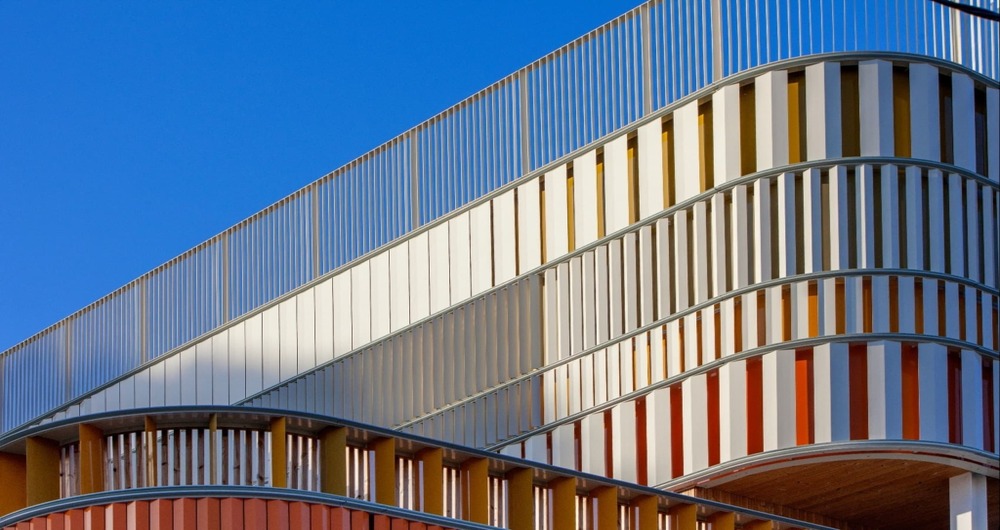
Modern projects demand façades that combine performance with architectural identity. Manufacturers are offering greater choices in colors, finishes, glass types, profiles, textures, and configurations. This allows unitized systems to support increasingly complex architectural designs while maintaining performance, durability, and functionality.
6. Improved Installation Efficiency
For high-rise developments, installation speed can have a major impact on project timelines. Unitized curtain walls are designed for efficient floor-by-floor installation, reducing the amount of on-site assembly required. This makes installation efficiency a strong selling point for façade brands targeting large and complex projects.
7. Precision Through Digital Manufacturing
Advanced manufacturing technologies, digital modelling, automation, and quality-control systems are improving the precision of unitized curtain wall production. Better coordination between design, fabrication, and installation can help manufacturers deliver complex façade systems with greater consistency and accuracy.
What This Means for Façade Brands
The unitized curtain wall segment is evolving beyond conventional façade systems. Performance, sustainability, digital manufacturing, design flexibility, and installation efficiency are becoming key differentiators.
For cladding and façade brands, keeping pace with these trends can open doors to new projects, partnerships, and market opportunities.
Connect With the Future of Façades at GCLAD
GCLAD Expo 2026 brings together the cladding and façade industry under one platform, creating opportunities for brands to showcase solutions, connect with industry professionals, discover emerging trends, and build valuable business relationships.
23–25 October 2026 | HITEX, Hyderabad
If your brand is shaping the future of façades, GCLAD is where your solutions need to be seen. Book your exhibition space and turn industry connections into business opportunities.